

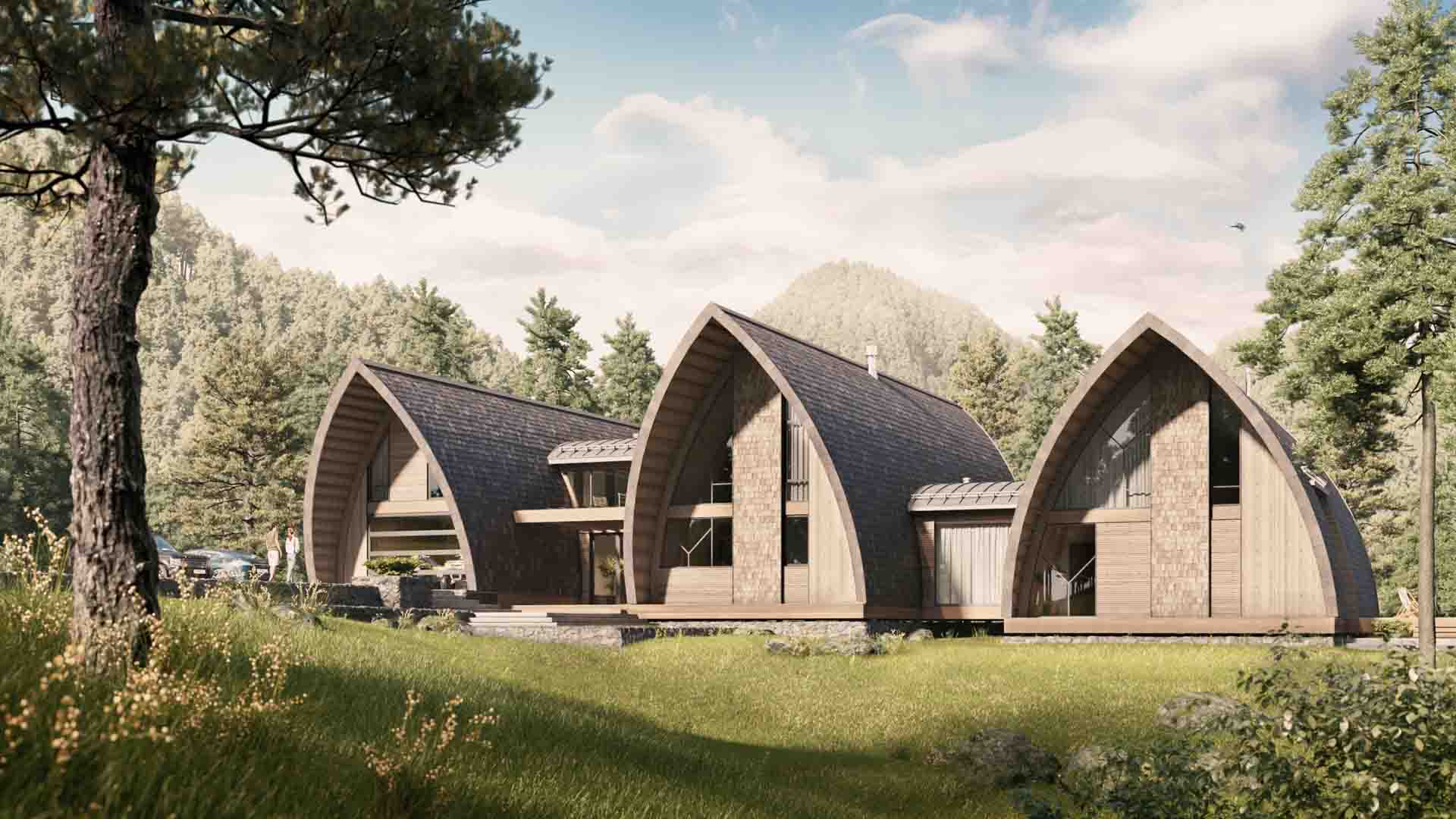
Small, low-cost hotels are not cost-effective in tourist centers, but critically needed in remote natural locations, and the mistake most projects make is not in the hotel format, but in the choice of location.
Small low-cost hotels are inefficient in tourist centers, but are critically sought after in remote natural locations.
The mistake of most projects is not in the format of a hotel, but in the choice of a place.
1.The tourist center is the territory of large-scale players, not small businesses.
In tourist centers (Chemalsky district, along the Chemalsky highway to the village of Yelandy, Turochaksky district from the village of Artybash to the village of Tula are already present:• Large hotels;
• complexes with restaurants, SPA, swimming pools;
• Hotels with medical, wellness and entertainment services.
Small hotels with 10-20 rooms are not selling well.
• They cannot compete in terms of services.
• do not form a “reason for travel”;
• Do not hold a guest for more than 1-2 nights.
Even with dumping, the economy does not add up:
• operating costs are almost the same as those of more expensive facilities;
• the price of the room does not compensate for downtime and seasonality;
• Marginality is approaching zero.
World practice, including OECD research, shows:
stable development of either large complexes or unique premium facilities,
Small budget formats are being replaced by the market.
2 Low prices do not expand the market, they only divide the existing market.
The calculation for a “mass budget tourist” does not work.Facts:
• The tourist flow from the Siberian region does not grow multiples from year to year, because the population of the region does not grow and the number of tourists does not increase.
• Budget hotels are being built faster than demand is growing.
• As a result, the market is overheated by supply.
Bottom line:
• the loading drops;
• The price war begins;
• The profitability disappears.
Tourists from remote regions of Russia:
• React poorly to advertising of small objects;
• choose locations with infrastructure and a variety of services;
• Not willing to fly or go far for the sake of “just a night out.”
According to the World Tourism Organization, long-distance tourists:
• Plan travel in advance;
• Choose complexes "all in one";
• Leave 2-3 times more money in the region.
Where Small Hotels Are Really Needed: Outside Tourist Centers
A completely different logic works in natural and remote locations.
Nature is the main tourist product of Altai - often:
• Remote from major hotels;
• difficult to access;
• Overloaded with day trips;
• Connected to traffic and logistics, especially in the summer.
This is where the sleepover deficit occurs.
Small objects:
• houses;
• glamping without a capital foundation;
• natural holdings,
They are not competitors, but a necessary continuation of the tourist route for large hotels.
4.Natural Loans as an Underfilled Niche
Remote natural locks:
• in demand as an additional excursion for large hotels and as an independent format of rest;
• work as overnight stays in excursion programs of large hotels;
• allow the tourist to “stay in nature” rather than return to the centre.
The practice of the Altai Mountainss shows:
• the demand for such loans is higher than the supply at times;
• competition is minimal;
• The price may not be low.
This is also confirmed by the world experience:
In the Alps, Canada, Scandinavia small remote lodge-objects work most often in conjunction with large resorts.
5.Small format economy in the right place
In remote natural locations:
• No expensive infrastructure is required;
• There is no direct competition with major hotels.
Value forms a place, not a set of services.
Here's a small format:
• pays off faster;
• Requires less investment;
• Suitable for small businesses and private investors;
• stays out of price wars.
According to McKinsey & Company,
Projects built into (rather than competing with) the tourism ecosystem show:
• More sustainable loading;
• less risk;
• More predictable cash flow.
Conclusion for the investor and developer
The mistake is not in small hotels; the mistake is to build them on the highway next to large tourist sites.
• Large complexes with infrastructure operate in tourist centers.
• Small budget hotels are:
• poorly sold;
• not cost-effective;
• They are losing the competition.
• In remote natural locations:
• Small formats are irreplaceable.
• Demand exceeds supply;
• competition is minimal.
The correct model of Altai is:
• large hotel clusters in the centers;
• a network of remote natural castles and glampings in remote natural locations, including those available only on all-terrain vehicles and accessible only from the air.